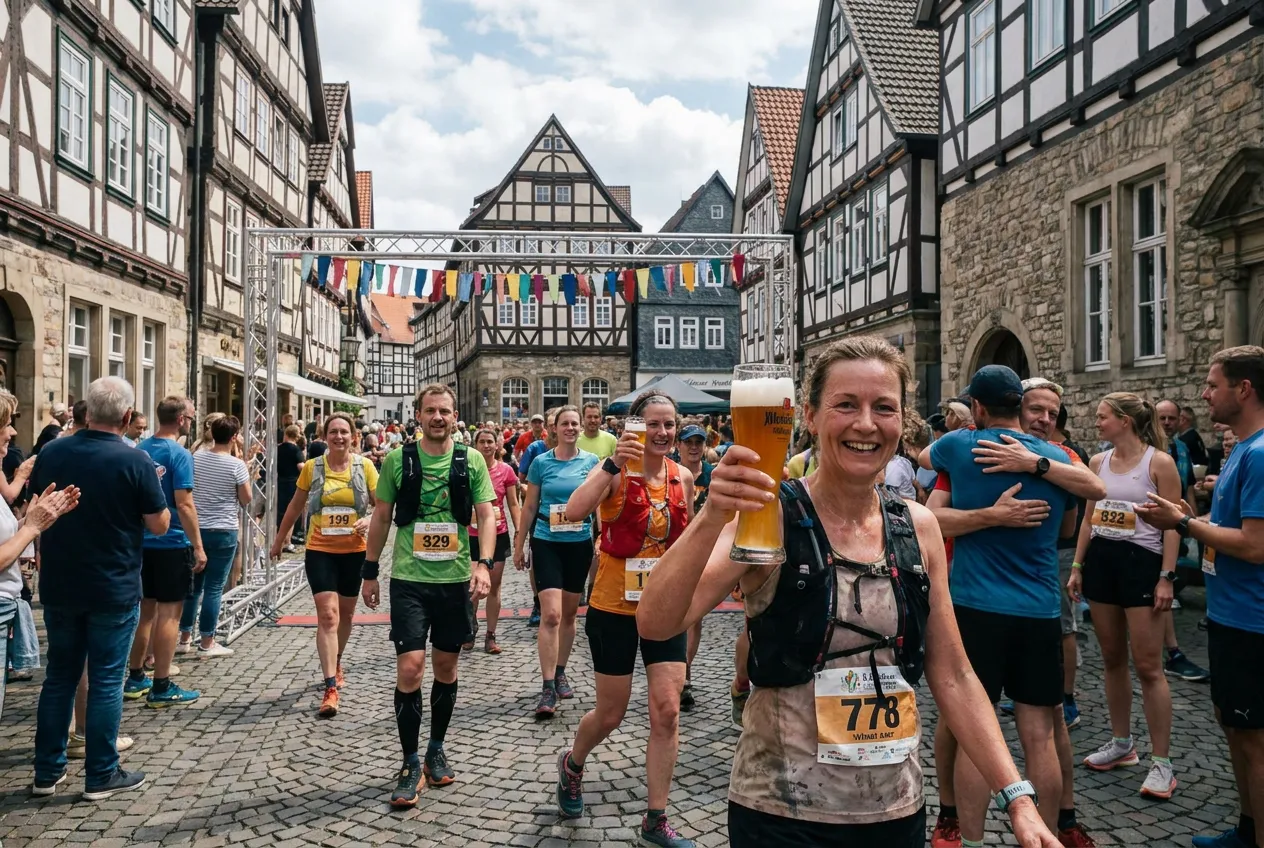
Not so long ago, the idea of drinking an alcohol-free beer would have turned the stomach of even the lightest of beer drinkers. The selection was slim, and the taste non-existent. However, the boom in craft beer over the past decade has also seen a massive increase in the range of alcohol-free beers on offer where taste is of paramount importance.
The German beer market is at the vanguard of the alcohol-free revolution, with each well-known brewery producing outstanding non-alcoholic versions of some of their finest beers.
So, now that it’s possible to enjoy the whole beer-tasting experience without the fear of picking up a hangover, these are ten of the best alkoholfrei German beers you should try.
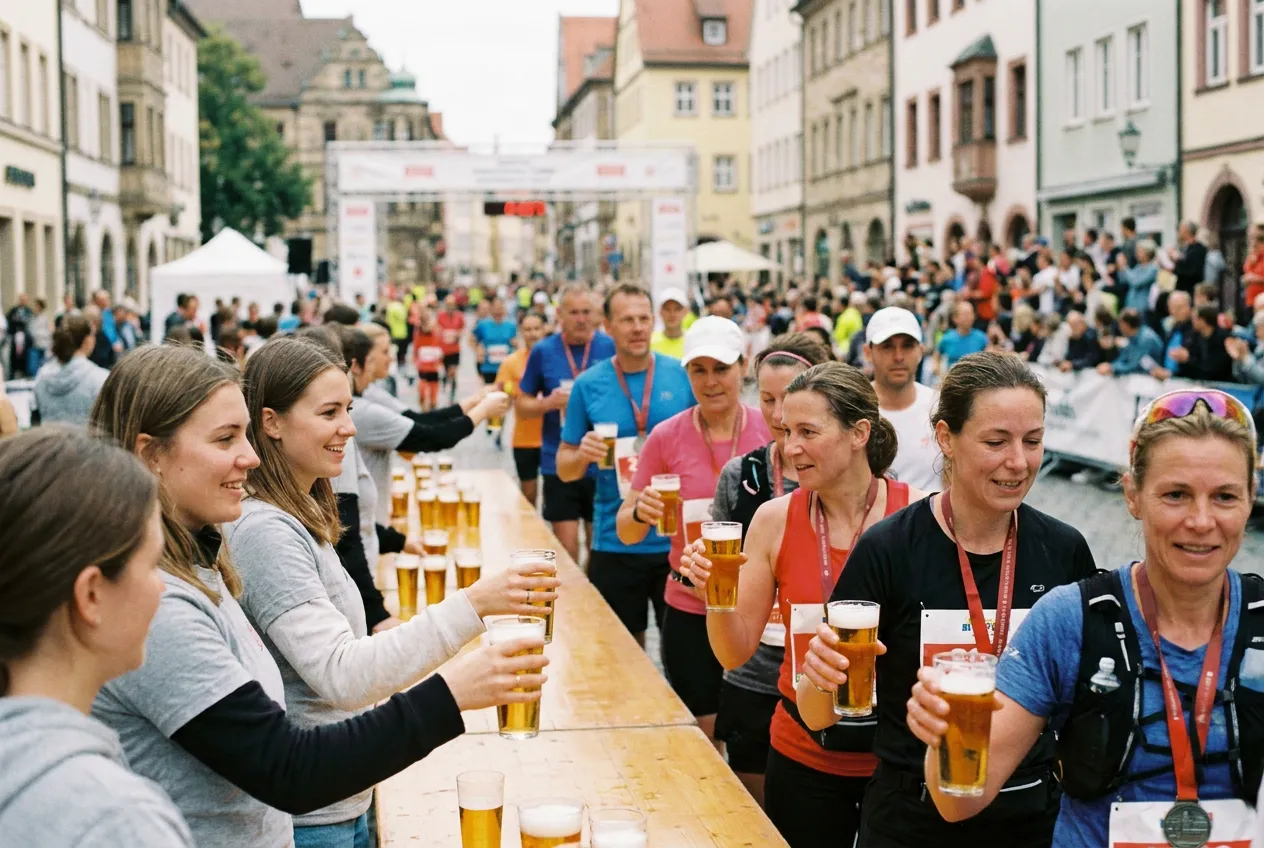
In 2026, alcohol-free beer is no longer a niche. German breweries produced around 616 million litres of it in 2025, 6.5 per cent more than the year before, while overall beer output keeps shrinking. Many of the big brands have gone a step further and now offer a true 0.0% version alongside their classic “alkoholfrei” (below 0.5%) beers. This updated list reflects those changes and covers a wide range of styles, from crisp Pils to fruity wheat beers, so there is something for every palate.
-
Paulaner Weissbier 0.0%, 0.0%
This brilliant thirst-quenching wheat beer from Munich’s Paulaner brewery is now completely alcohol-free and contains just 24 calories per 100ml, fewer than a glass of white wine, yet it still provides the same heavy Weissbier punch as the alcoholic version. Like its alcoholic sibling, it is cloudy and full of flavour and doesn’t scrimp on the refreshing qualities that offer a genuine taste of Bavaria.
The alcohol-free Weissbier also contains vitamins, such as folic acid and vitamin B12. This makes it an excellent option to refresh after a workout or as a mid-afternoon refreshment.
Paulaner began producing alcohol-free Weissbier in 1986, and advances in the brewing process make its 0.0% version one of the best on the market today. It is brewed like the classic Paulaner Weissbier and then gently de-alcoholised, which keeps the traditional fruity aroma.
With the hint of malt and yeast familiar to drinkers of Paulaner’s alcoholic cousin, this alcohol-free beer is the perfect drink to accompany a summer dish such as cold cuts with salad. -
Krombacher 0,0% Pils, 0.0%
Krombacher offers alcohol-free versions of many of its products, and it has brewed an alcohol-free Pils since 1999. Today the star of the range is the Krombacher 0,0% Pils, which is completely free of alcohol.
The alcohol is removed after fermentation rather than the beer being brewed as low-alcohol from the beginning. This allows the rich maltiness and bready aroma familiar from the alcoholic version to remain. All ingredients are carefully selected, including Hallertau hops, a popular addition to many German pilsners.
With just 27 calories per 100ml (around 89 per 330ml bottle), Krombacher’s 0,0% Pils is popular with athletes and fitness fans after a workout, and it adds folic acid and vitamins B6 and B12. The full-bodied taste is maintained along with the smooth feeling in the mouth that is associated with the alcoholic Pils. -
Weihenstephaner Original Helles Alcohol-Free, less than 0.5%
The non-alcoholic Weihenstephaner Helles won Bronze at the 2018 Australian International Beer Awards and is a superb low-calorie alternative to its alcoholic cousin with just 65 calories per 500ml. In addition, Weihenstephaner’s alcohol-free Helles is an excellent low-sugar, low-carb alternative, making it one of the healthiest beers on the market.
With a crisp deep golden colour and beautiful foamy head reminiscent of a good glass of German beer, this beer provides the malty base flavour and hoppy bitterness you’d expect from a Helles, followed by a crisp, clean aftertaste. This is underpinned by some sweetness and beautiful floral notes with each sip, all contained within a mouth-watering carbonated package that will not fail to delight your tastebuds.
It is a perfect drink alongside a heavy Sunday roast, with its lightness complementing the meal, or a traditional Swiss Wurstsalat. Alternatively, sit in a sunny garden on a Saturday afternoon and enjoy all the taste and none of the heavy head you’d get from the alcoholic version. -
Warsteiner Alkoholfrei 0,0%, 0.0%
Warsteiner’s alcohol-free range has long been promoted in Germany by Jürgen Klopp, the former Borussia Dortmund and Liverpool manager who has been Red Bull’s Head of Global Soccer since 2025. Since 2021, Warsteiner has also offered a completely alcohol-free 0,0% Pils in a bright blue design, alongside its classic Pilsener Alkoholfrei.
It is isotonic and vitamin-rich, making it an excellent low-calorie beer that can be drunk after a workout to refresh, rehydrate and restore some nutrients lost during exercise.
It is brewed with soft spring water from the nature reserve around the Warsteiner brewery, with barley, hops and yeast, in accordance with the famous 16th-century Reinheitsgebot, the German beer purity law.
The result is a pale, crisp beer with a small head that quickly disappears to leave a fresh, clean and light taste, without a particularly hoppy aftertaste. This is thanks to gentle vacuum de-alcoholisation at low temperatures.
Warsteiner’s alcohol-free Pilsener won an IBC silver medal in 2016, proving its credentials as a genuinely high-class non-alcoholic beer. -
Uberbrau Ultra Low Alcohol Lager, 0.4%
Uberbrau is a German-brewed, low-alcohol lager made especially for the Australian market and sold through Liquorland, First Choice Liquor Market and Coles Online.
This 0.4% lager delivers a fresh and crisp taste with a delicate fruity aroma, and it is low in carbs.
As with its non-alcoholic shelf-mates, it is low in calories at just 78 calories per 330ml bottle, making it a healthy alternative to a regular lager.
The light body and refreshing taste of Uberbrau make it an excellent accompaniment to spicy foods, such as curries or spicy chicken wings. Its light hops make it easy to drink and help to bring out the full flavours of the food. -
Maisel’s Weisse Alcohol-Free, less than 0.5%
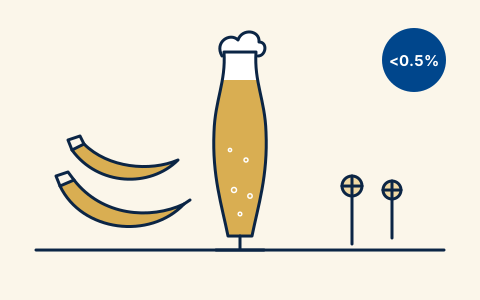
Maisel’s Weisse alcohol-free beer is a low-calorie, healthy alternative to the beautiful, fruity, full-bodied, alcoholic version of Maisel’s Weissbier.
The brewing process is similar to the alcoholic Weissbier before the alcohol is gently removed and fresh brewing wort is added. It contains less than 120 calories per 500ml, more than a third less than its alcoholic sibling. This makes it the perfect Weissbier for health-conscious, active drinkers looking for a vitamin-rich isotonic drink to replenish and refresh after a workout.
The bright amber colour, slightly darker and redder than many wheat beers, lies beneath a big, white, foamy head reminiscent of the finest German wheat beers. A spicy, malty aroma gives way to tastes of fruit, similar to ripe bananas, cloves and a hint of nutmeg, before a complex, wheaty finish with the last sips. The creamy feeling in the mouth and the low carbonation make it a smooth drinking experience without leaving the slightly bloated feeling that often comes with drinking Weissbiers.
This multi-award-winning non-alcoholic wheat beer is best served with beef, goat’s cheese or a fruit salad to complement its flavours. -
Clausthaler Original, less than 0.5%
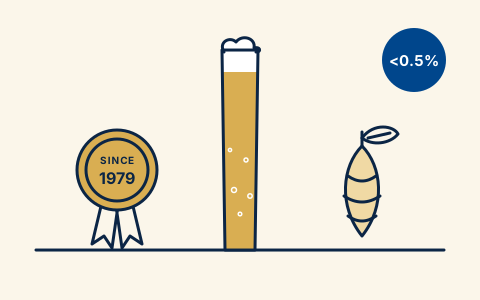
Widely considered the original non-alcoholic beer brand, Clausthaler was the first German brand to brew and sell only non-alcoholic beer, first hitting the market in 1979. After initial scepticism from many, a slow increase in popularity and clever marketing campaigns mean Clausthaler is now sold in dozens of countries worldwide.
Unlike many non-alcoholic beers, this original lager does not undergo a process of de-alcoholisation. Instead, it is brewed with a special fermentation process so that very little alcohol is produced in the first place.
The low-calorie beer comes in at 26 calories per 100ml and, when poured from a bottle, produces a clear, lightly orange-coloured beer with visible bubbles and a small head that quickly dissipates. This gives way to sweet malty aromas mixed with hints of corn and hops.
That sweet maltiness is the first taste that hits the palate, to be taken over by more of a roasted flavour along with a whole body and a good but not overpowering level of carbonation. It is a crisp, light beer with a slightly bitter aftertaste, which will please those who enjoy their beers not too sweet.
This combination provides a different taste experience from alcohol-free lagers whose origins lie in an alcoholic version. This easy-drinking non-alcoholic lager is slightly more adventurous and well worth taking the time to try. -
Bitburger 0,0% Drive, 0.0%
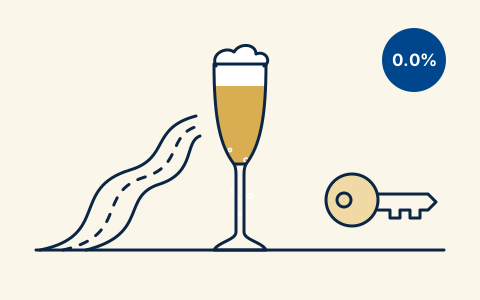
A genuinely alcohol-free beer, Bitburger’s 0.0% Drive finally lives up to the brewery’s advertising slogan from the 1950s, “abends Bit, morgens fit”. This translates as “Bit in the evening, fit in the morning.”
Bitburger’s alcoholic pilsner is one of the highest-selling beers in Germany, available in 70 countries and still family-owned. Its alcohol-free offering hit the market relatively late, in 2007, but it has quickly risen to become one of Germany’s leading non-alcoholic beers.
The brewing process is the same as for the alcoholic pilsner, with the beer being brewed at full strength before a careful process extracts all of the alcohol, leaving 0.0%. Most ingredients are sourced from the Bitburg area, with barley malted in the brewery’s own malthouse, complemented by Bavarian Hallertau hops. This low-carb beer is also wholly sugar-free.
When poured, the beer is a beautiful clear amber colour with a thin white head that is retained throughout drinking. The light malty aroma is offset with a floral smell from the Hallertau hops, while the taste is mildly sour and fruity. This, combined with the maltiness, offers a more varied aroma and taste than many non-alcoholic pilsners.
The light carbonation doesn’t leave a gassy feel, and the crisp, refreshing, dry body leaves you wanting more rather than feeling overwhelmed. This makes it the perfect lager for a night out when you’re on driving duties or for a quiet, sunny summer’s afternoon. -
Beck’s Blue, 0.05%
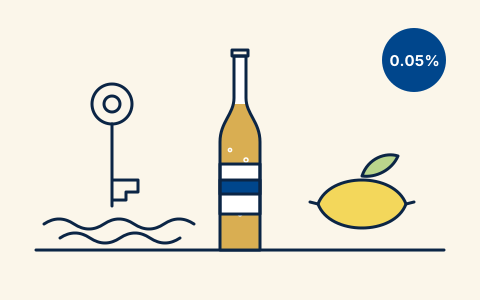
Beck’s is one of Germany’s leading beer exports, and this non-alcoholic pilsner continues that tradition by being one of its top non-alcoholic exports. Created in 1993, it hit the export market in 2003 and has gone on to become extremely popular throughout the world.
One of the first mass-produced non-alcoholic beers, Beck’s Blue is brewed in the same way as the standard Beck’s before the alcohol is gently removed after fermentation, leaving just 0.05%.
Brewed in Bremen and conforming to the Reinheitsgebot, Beck’s Blue contains only natural ingredients, making it a vegan-friendly beer. It is also very low in calories at just 46 calories per 330ml bottle, making it one of the healthiest non-alcoholic beers on the market. This is backed up by its low-carb and low-sugar content, making it an attractive alternative to other mass-produced non-alcoholic offerings such as Heineken 0.0.
The beer pours an amber colour with a lovely white frothy head that remains as you drink, while the aromas are a mixture of maltiness and lemon. The carbonation is higher than in some of its competitors, and the taste is a little more bitter than some. However, it is a more than drinkable beer for those who enjoy their beers without too much sweetness. -
Erdinger Alkoholfrei, less than 0.5%
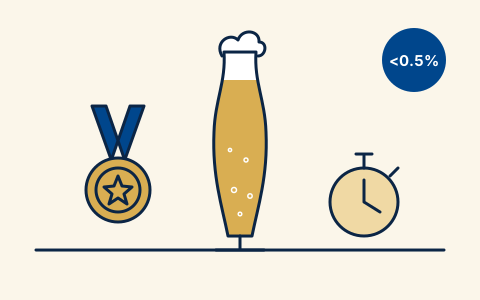
Erdinger is renowned for its wheat beers, and its non-alcoholic version is no exception. It offers a refreshing, wheaty taste with hints of citrus and a smooth finish. This beer is often praised for retaining the traditional Erdinger flavour without the alcohol, making it a favourite among those seeking a non-alcoholic option. It’s also popular as a post-sport recovery drink due to its isotonic properties and vitamins.
An alcohol-free German Beer for everyone
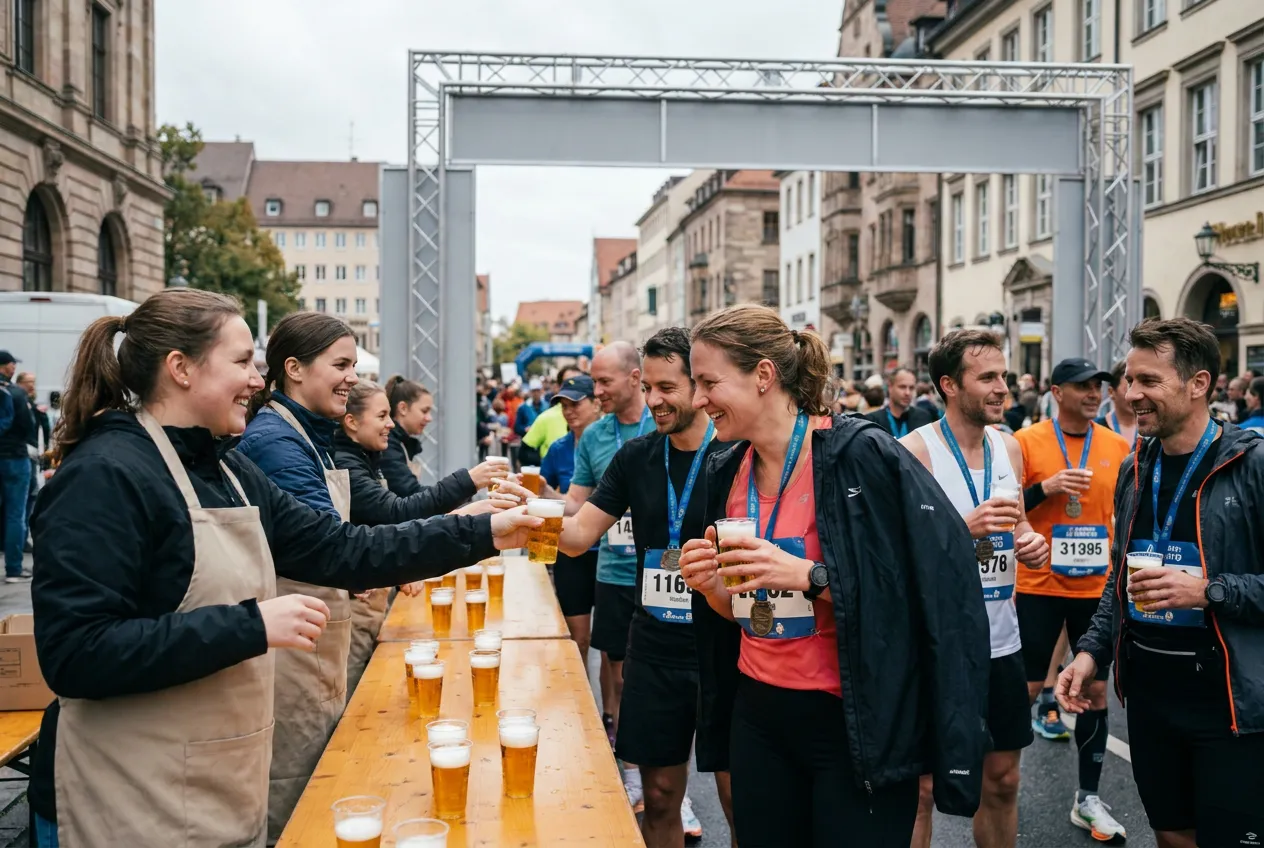
The days of non-alcoholic beer drinkers having to choose from a slim choice of thin, bland, watery, tasteless mass-produced offerings are long consigned to the history books. This is due to the increased demand for non-alcoholic beer across the world.
The Australian beer market is no different. Breweries worldwide are responding to this demand by offering alcohol-free versions of their most popular products. The German beer market is at the vanguard of this movement.
It’s now possible to enjoy the best that the German beer industry offers without having to worry about hangovers or the health issues arising from alcohol consumption.
German beer manufacturers have focused on minimising alcohol content while not compromising on the taste experience. This has led to a plethora of outstanding, full-bodied, wonderfully tasting beers available to drinkers and non-drinkers alike.
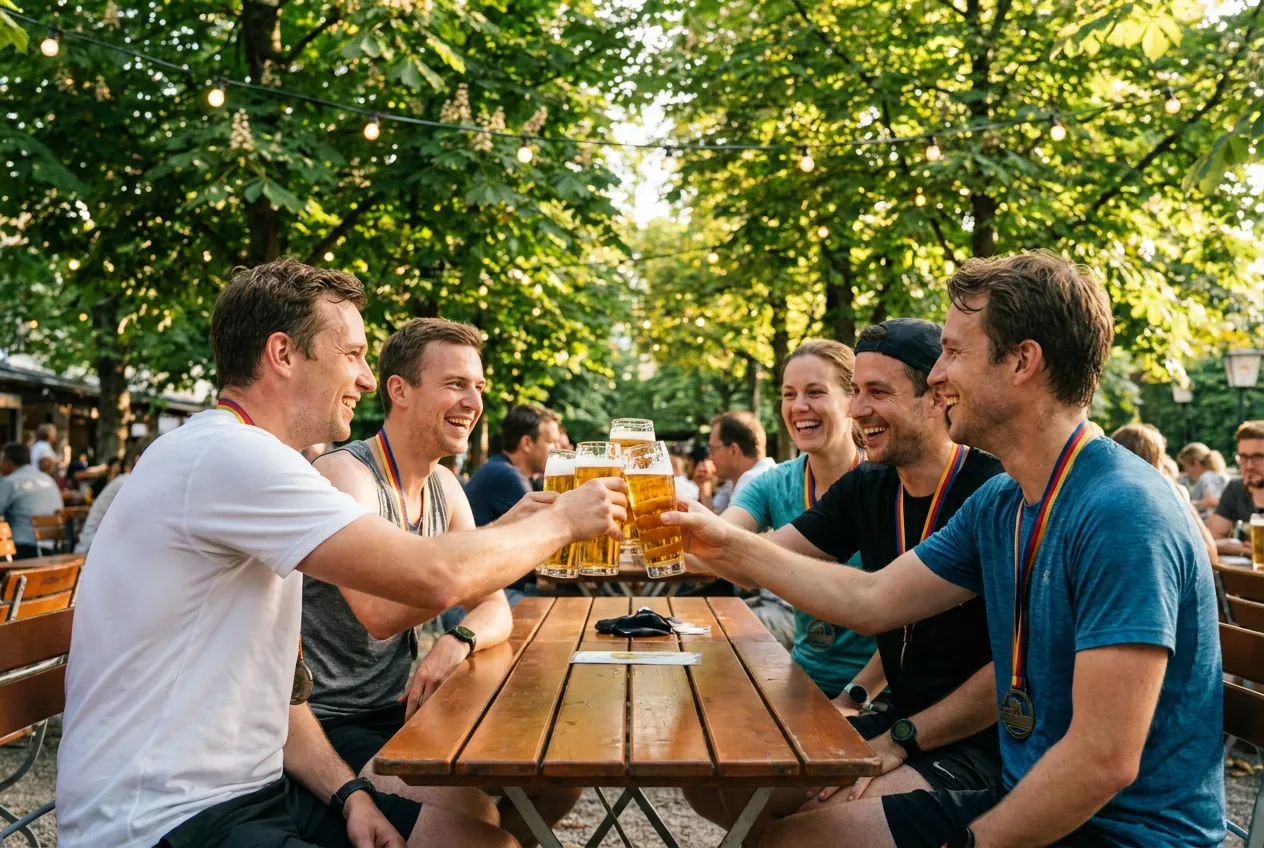
Non-Alcoholic Beers FAQs
What is the maximum alcohol content of alcohol-free beer in Germany?
Any beer with an alcoholic content of 0.5% ABV or less is considered non-alcoholic under German law. Beers labelled 0.0% contain no measurable alcohol at all.
Is German alcohol-free beer also brewed in accordance with the German beer purity law?
Yes, as with alcoholic beer, all German-brewed alcohol-free beer must use only natural ingredients in compliance with the Reinheitsgebot.
How popular is alcohol-free beer in Germany?
More popular than ever. According to the Federal Statistical Office (Destatis), German breweries produced around 616 million litres of alcohol-free beer in 2025, worth about 696 million euros. That is 6.5% more than in 2024, when production was just under 579 million litres.
Why are non-alcoholic beers becoming more and more popular?
Alcohol-free is the trend. Alcohol-free beers are also brewed according to the purity law and consist exclusively of natural ingredients. Compared to alcoholic and various non-alcoholic drinks such as juices and lemonades, they contain fewer calories and are therefore an ideal thirst quencher. Whether Pilsner, wheat beer or Radler, whether regional specialities such as Kölsch, Alt or Hell: non-alcoholic beer is so versatile that everyone has a taste for it. Since it is often even isotonic, non-alcoholic beers are becoming increasingly popular, especially among athletes.
The first non-alcoholic beers came onto the market as early as the 1970s. After their sales had levelled off at around 2.3 million hectolitres by 2007, a steady growth set in from 2008 that continues to this day. Sales passed the five million hectolitre mark for the first time in 2014, and the growth has continued since.
The trend is especially clear when compared with regular beer. In 2024, German breweries produced about 12.5 litres of alcoholic beer for every litre of alcohol-free beer. By 2025, that had fallen to about 11.1 litres, so roughly one in every twelve litres of beer brewed in Germany is now alcohol-free. This makes Germany’s brewers world leaders in the production of alcohol-free beers. Like alcoholic beers, non-alcoholic beers are brewed according to the Purity Law of 1516, which has been in force for over 500 years, and consist exclusively of the natural ingredients water, malt, hops and yeast.
Why are there usually still small traces of alcohol in alcohol-free beers?
Due to the production processes, non-alcoholic beers can contain up to 0.5 percent alcohol by volume – traces of alcohol that are, however, so small that they have no physiological effects on the human body. While in other EU states such as France or Spain a value twice as high is permitted, beers declared as “alcohol-free” in Germany may only contain up to 0.5 % vol. This value also applies to non-alcoholic wines and sparkling wines and is thus lower than that of many other foods such as bananas, sauerkraut, vinegar, kefir or grape juice. More and more brewers now also offer 0.0% beers for those who want to avoid alcohol completely.