It is world-famous and respected by beer lover all over the world: The German Reinheitsgebot (Purity Law). In 2016, the Reinheitsgebot celebrates its 500th birthday. The Purity Law was enacted on 23 April 1516 in Ingolstadt, Bavaria, by the dukes Wilhelm IV and Ludwig X as part of a state order. Initially, the Purity Law applied only to the Duchy of Bavaria, but after it was promulgated on 23 April 1516, it was adopted by more and more States and has been the law in force throughout Germany since 1906.
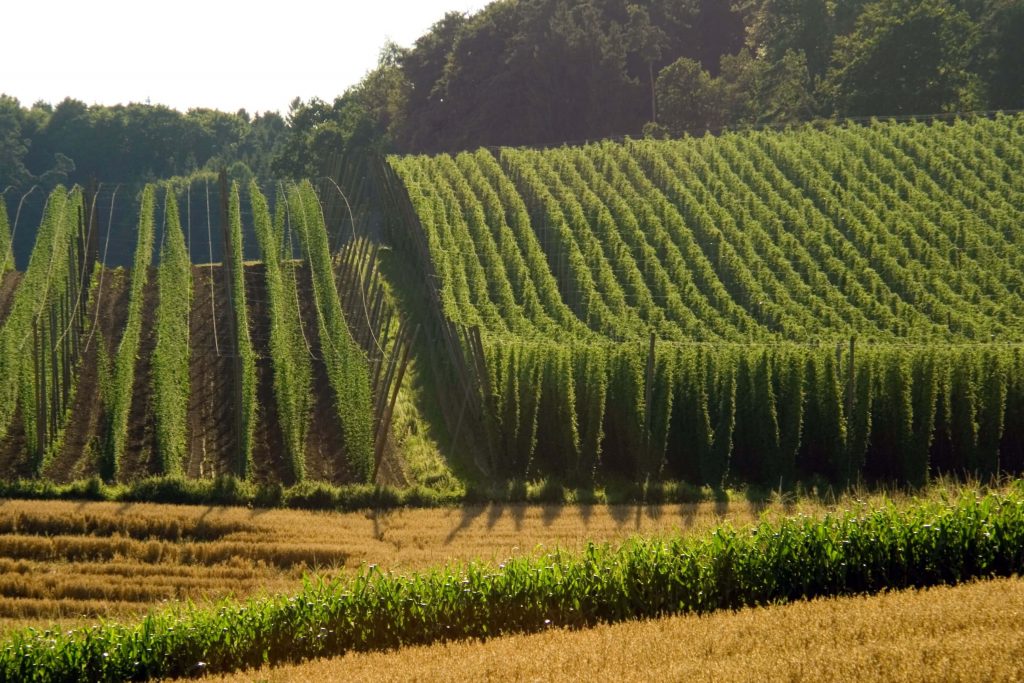
The Purity Law stipulates that only water, malt, hops and yeast may be used to produce beer. It stands for the preservation of a time-honoured craft technique and is also considered the oldest food law regulation in the world that is still valid today. In Germany, this has developed over centuries into an art of brewing that is respected worldwide: Day after day, over 1,500 German breweries create a unique variety of over 40 different types and around 7,000 individual beer brands from just four natural ingredients.
Do German breweries still brew according to the German Purity Law of 1516?
The Purity Law of 1516 regulated the ingredients for beer. The specification of ingredients at that time is the basis for the Provisional Beer Law, on which beer production in Germany is still based today. German beer today is therefore still a purely natural product in the sense of the Purity Law of 1516. Of course, beers are no longer brewed as they were over 500 years ago – in open vats over an open fire. That has long been history and can only be found in museums. Today, beer is produced in modern breweries under the highest hygienic standards. Brewing technology, for which Germany is also world-famous, has been improved and refined over the years. Equipment is used to precisely control and monitor the brewing process and the processing of the raw materials. All natural ingredients are carefully selected and controlled.
But even with the use of modern brewing technology, nothing has changed in the basic principle: Brewing is done according to the purity law. Unlike breweries abroad, German breweries are still not allowed to use artificial flavourings, artificial colourings, artificial stabilisers, enzymes, emulsifiers or preservatives. Brewing beer is still limited to the use of the four natural ingredients water, malt, hops and yeast – and is thus significantly more elaborate and demanding than in most foreign breweries.
Which additives are prohibited in brewing according to the German Purity Law?
The Purity Law not only regulates what may be put into beer, but above all what may not be used in brewing. Unlike breweries abroad, German breweries that produce beer according to the Purity Law and declare it as such are still not allowed to use flavourings, colourings, stabilisers, enzymes, emulsifiers or preservatives. Brewing beer is still limited to the use of the four natural ingredients water, malt, hops and yeast – and is thus considerably more elaborate and demanding than in most foreign breweries.
According to German food law, no additives are permitted for beer brewed according to the Purity Law, while European additive law in Regulation (EU) No. 1129/2011 allows the additives (E)
E 150 a – d sugar caramel
E 210 – E 213 benzoic acid
E 200 – E 203 Sorbic acid
E 220 – E 228 Sulphur dioxide
E 270 Lactic acid
E 300 Ascorbic acid
E 301 Sodium ascorbate
E 330 Citric acid
E 405 Propylene glycol alginate
E 414 Gum arabic
E 950 Acesulfame K
E 951 Aspartame
E 954 Saccharin and its Na, K and Ca salts
E 955 Sucralose
E 959 Neohesperidin DC
E 961 neotame
E 962 Salt of aspartame-acesulfame
for brewing beer in the European Union. Beer according to the Purity Law in fact has the status of a “Traditional Food” – this is explicitly stated in Annex IV of Regulation (EC) No 1333/2008. Article 20 of this regulation stipulates that for “traditional foods” EU additive law may be drastically restricted at national level. Germany has seized precisely this opportunity and does not allow any additives for purity beers apart from carbonic acid and nitrogen as propellants. Considering the long list, every consumer can see that this circumstance increases the value of our beers.
Why is the Purity Law so important for brewers in Germany?
For most brewers in this country, adherence to the Purity Law and the art of brewing a wide variety of high-quality beers from just four ingredients are a matter of course, but also a great challenge and incentive, because artificial ingredients or substitutes remain taboo. What makes the German art of brewing so special is that those who have mastered their brewing craft know how to create a wide variety of beer styles from the four ingredients water, malt, hops and yeast. More than 98 percent of craft beers are also brewed according to the purity law. Important factors for brewing include the hardness of the water, the choice of malt and hops, the respective yeast strain and the mashing process as well as the fermentation conditions in the fermentation tank. Worldwide, there are around 250 hop varieties, around 200 yeast strains and more than 40 different types of malt that are suitable for brewing beer. Experts have calculated that there are more than a million different ways to brew a beer according to the purity law.
What level of acceptance does the Purity Law enjoy among German consumers?
In a survey in spring 2014 (1002 respondents aged 18 and over), 85 per cent of Germans said that the purity law for beer should continue to apply and that no ingredients other than water, malt, hops and yeast should be permitted for brewing beer. Only eight percent were of the opinion that other ingredients should also be permitted in the future for beer production in Germany. The Beer Purity Law is probably also the best-known “food law” in Germany: at 89 percent, the vast majority of Germans have heard of it, with the Purity Law being even better known in the east of Germany (92 percent) than in the west (89 percent). In addition, 77 percent of Germans said they would like to see a purity law for other foodstuffs and semi-luxury foods as well, where the law stipulates that only certain ingredients may be used. It is also noteworthy that 77 percent of those consumers who do not describe themselves as beer drinkers welcome the positive elements of the Purity Law for beer and see it as a benchmark for other products in the food industry.
In the likewise representative survey for the association “Die Lebensmittelwirtschaft” (The Food Industry), 79 percent of Germans stated that German beer brewed according to the purity law was particularly worthy of protection and value in their view (TNS-Infratest, 3-5.2.2014, 1000 respondents). This puts beer far ahead of other foodstuffs and luxury foods such as wine or milk.
Do foreign beer drinkers care about the German Purity Law?
They do! German beers brewed according to the Reinheitsgebot enjoy a steadily growing popularity abroad. In the ranking of the largest European beer producers, Germany is at the top of the list. With a good 16 million hectolitres, Germany exports more beer abroad than most other countries produce, which underlines the popularity of German beers brewed according to the Reinheitsgebot. Current figures show that Germany’s breweries have recently also benefited from the upswing in Asia and the associated increase in demand for foreign quality products. But exports within the European Union are also showing a positive trend. The main reasons for this are the high quality and the high reputation of German beers.
Is the purity law limiting diversity and innovation for German brewers?
On the contrary: Even though brewing in Germany is limited to the ingredients water, malt, hops, yeast – behind this, however, there is an immense variety of possibilities for brewing good beer. Brewers have around 250 different hop varieties and 40 different malt varieties at their disposal, and there are also almost 200 different yeast strains. The choice of water also has an impact on the flavour of the beer. Not to mention the special features of the brewing processes. Taking all variations into account, there are more than 1 million different ways to brew a beer according to the purity law.
Are beers that do not comply with the Purity Law also allowed to be brewed in Germany?
Yes, in the law (§ 9 para. 7 Provisional Beer Law) there is an exemption for so-called “special beers”. This regulation applies to all federal states except Bavaria. This allows brewers to produce beers with, for example, spices such as aniseed, cinnamon or cloves and fruits such as orange or cherry. Well-known beer styles that have always deviated from the strict purity law are, for example, Berliner Weiße or Leipziger Gose. According to the existing law, only those additional ingredients may be used that give the beer a special character or taste. Malt or hop substitutes are also not permitted in “special beers”. Furthermore, it is permitted to deviate from the purity law in beers for export. “Special beers” and beers deviating from the Purity Law for export require approval by the respective competent Land authorities. Those who brew no more than 200 litres of beer per year for themselves at home also do not need to comply with the Purity Law.
Is German beer vegetarian and vegan?
German beers are vegetarian and vegan. No animal substances are used in the production of beer. The Provisional Beer Law based on the Purity Law and the Beer Ordinance give clear guidelines for the production of beer, according to which animal substances such as gelatine or isinglass are not permitted. What one should know, however, is that some label glues may contain casein of animal origin (proteins from milk).