At any Oktoberfest in Australia, a good part of the crowd will be in costume. Whether you want an authentic Bavarian dirndl that lasts for years or a $40 costume for one big afternoon, here are 15 Oktoberfest outfit ideas, followed by the Australian stores that sell them.
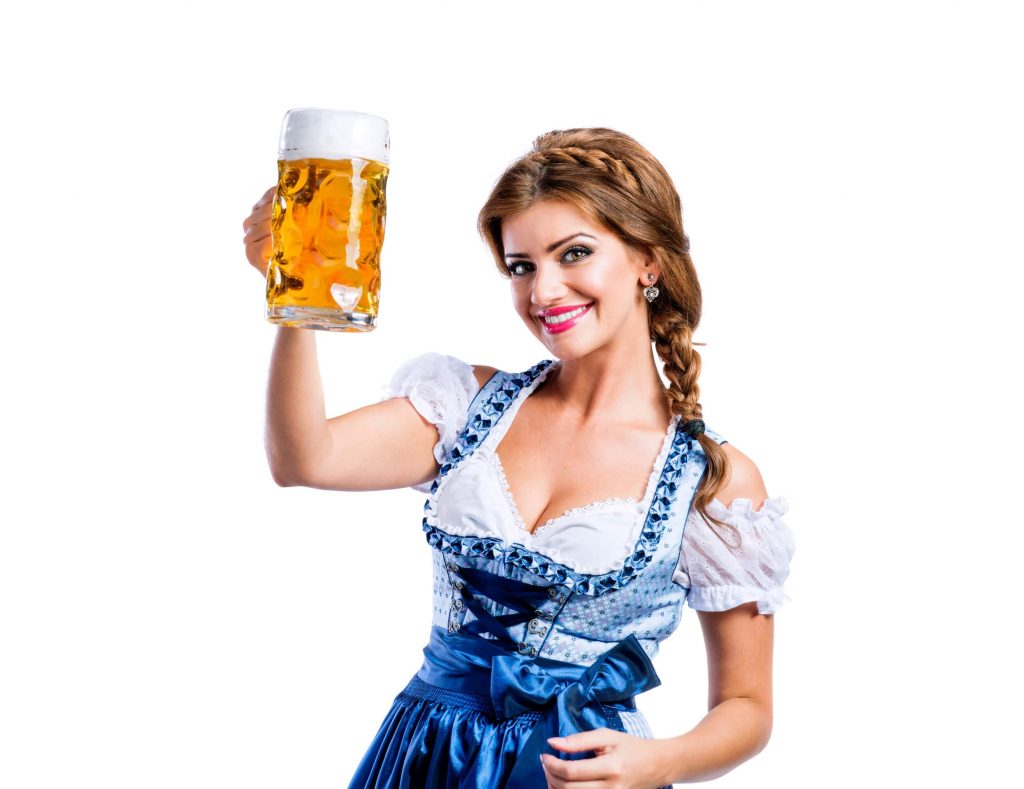
Traditional outfit vs costume: what’s the difference?
In Bavaria, the dirndl and lederhosen are Tracht: traditional clothing worn with pride at festivals, weddings and church holidays. A real dirndl is made from cotton, linen or silk, and a real pair of lederhosen is made from deer or goat leather that softens with years of wear.
An Oktoberfest costume is the fancy-dress version: polyester, printed details and a far lower price. Both are welcome at any Australian Oktoberfest. Buy a costume if you’ll wear it once, and buy Tracht if you plan to go every year.
Oktoberfest outfits for men
1. Classic short lederhosen
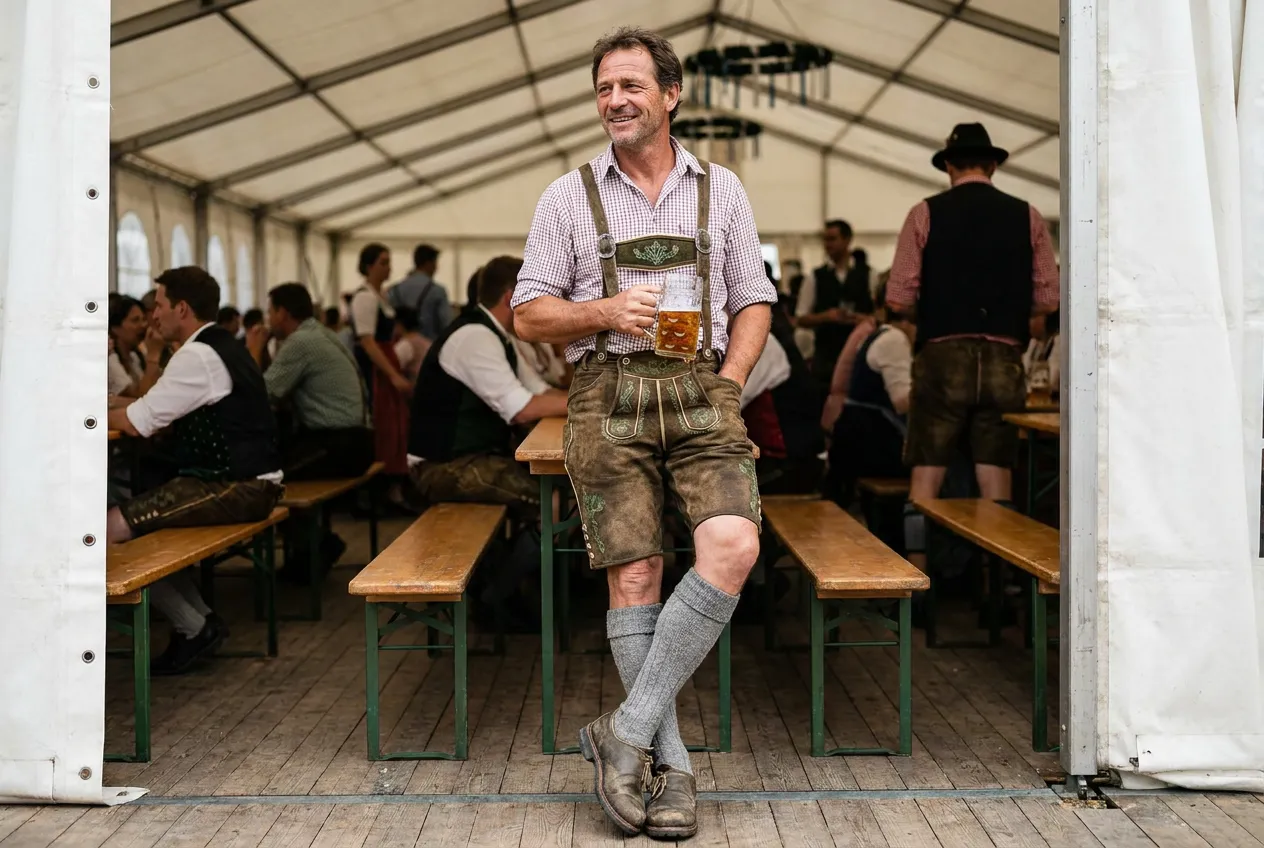
The iconic look: knee-length or shorter leather shorts with an embroidered front flap and H-shaped braces (Hosenträger). Brown suede is the most traditional colour. Authentic leather lederhosen start at around $200 in Australia, while costume versions cost $40 to $60.
2. Kniebundhose (knee-length lederhosen)
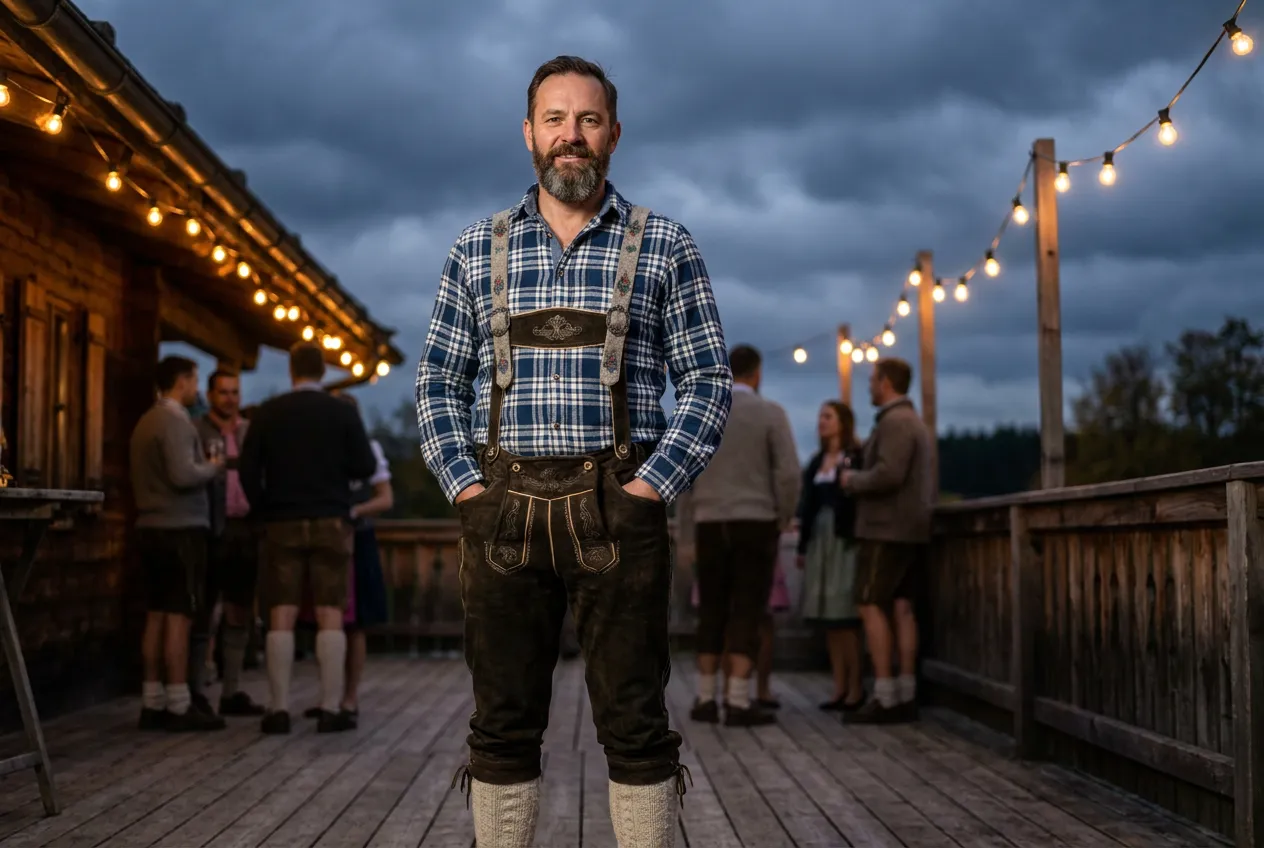
The longer cut, fastened just below the knee, is the more formal Bavarian style and a little warmer on a cool October night. Wear it with calf-length socks so no skin shows at the knee.
3. Checked shirt and braces
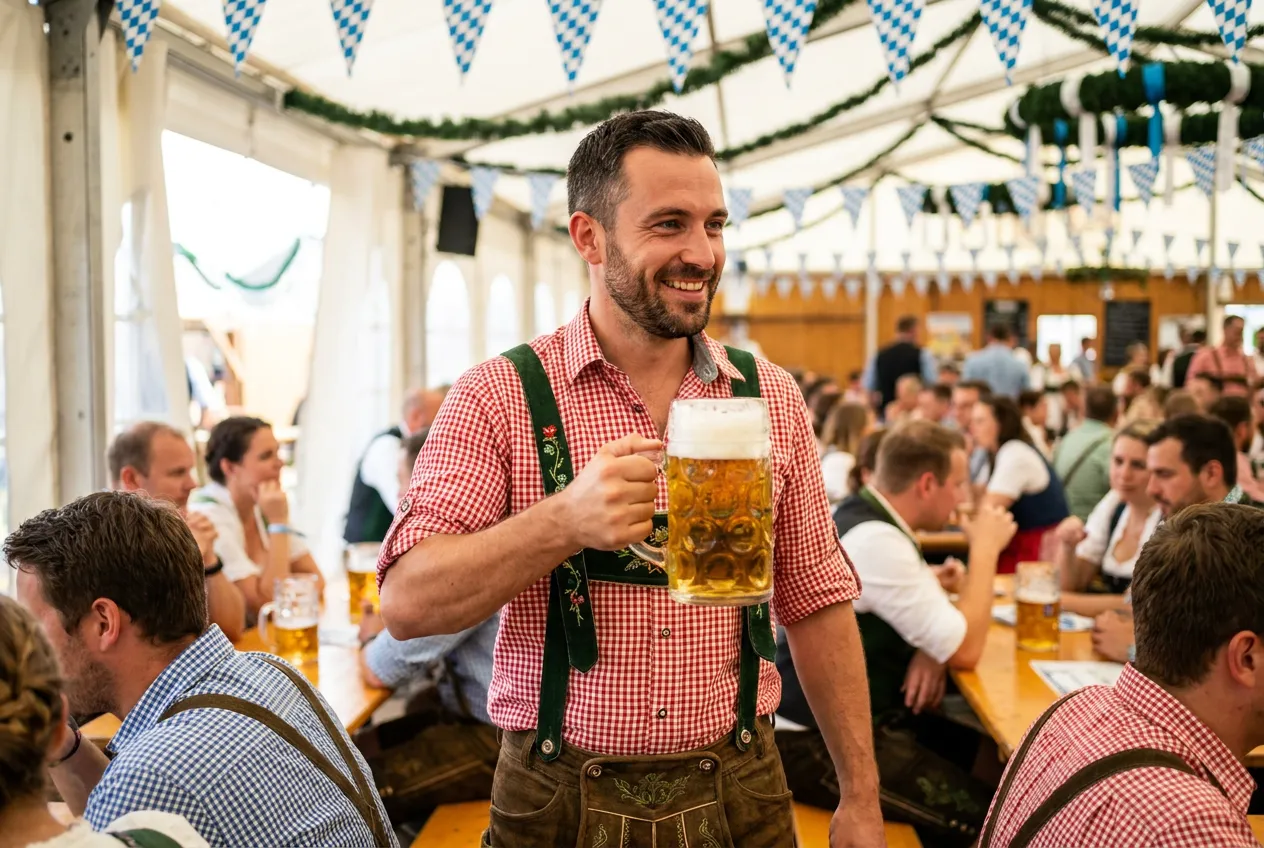
The most common men’s Oktoberfest outfit in Munich: a red-, blue- or green-checked shirt, sleeves rolled up, worn with lederhosen or smart dark trousers. If you only buy one piece, make it this shirt. It works for German club nights all year.
4. The full Bavarian: waistcoat and jacket
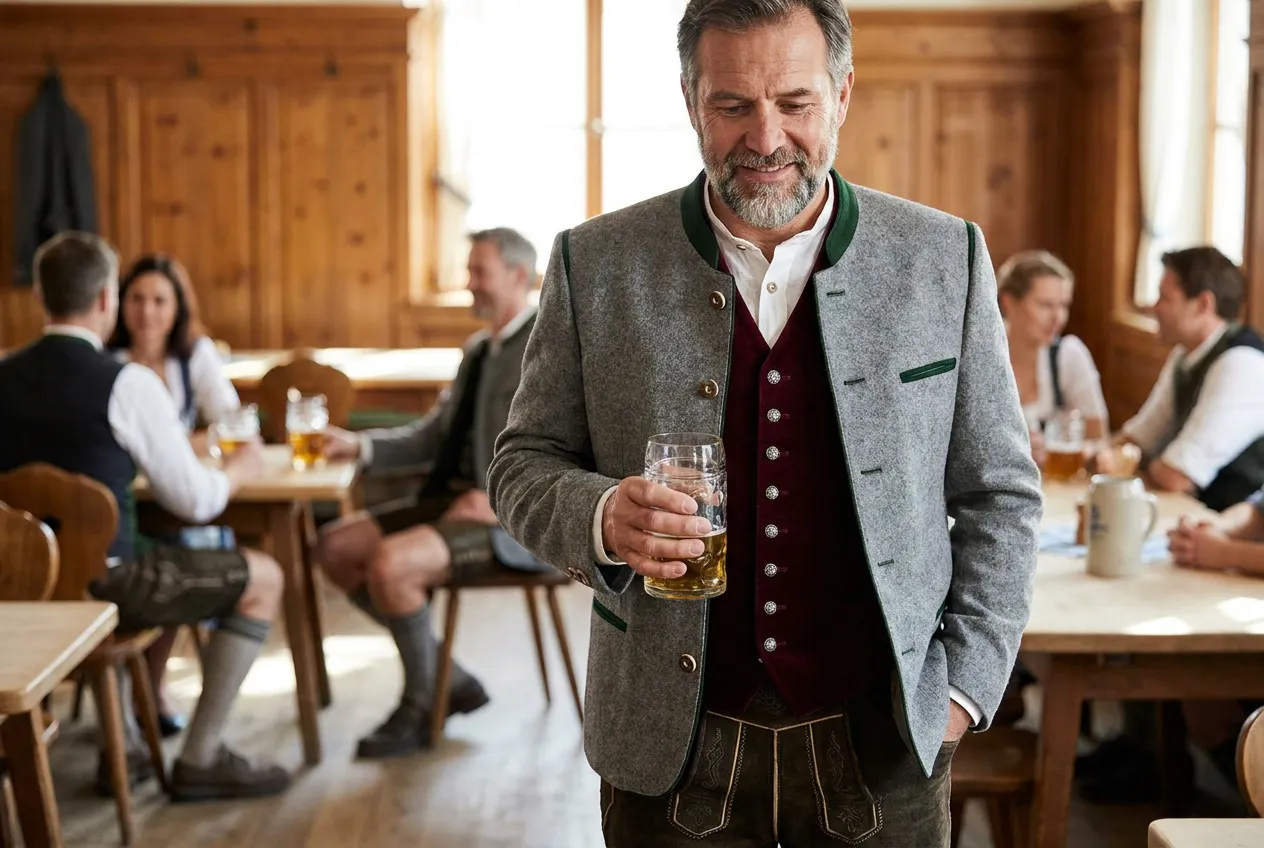
Add a traditional waistcoat (Weste) in wool or velvet over your shirt, or a grey wool Janker jacket with horn buttons. It’s the dressed-up look for a table booking at the Hofbräuhaus or a German club.
5. Alpine hat with a feather
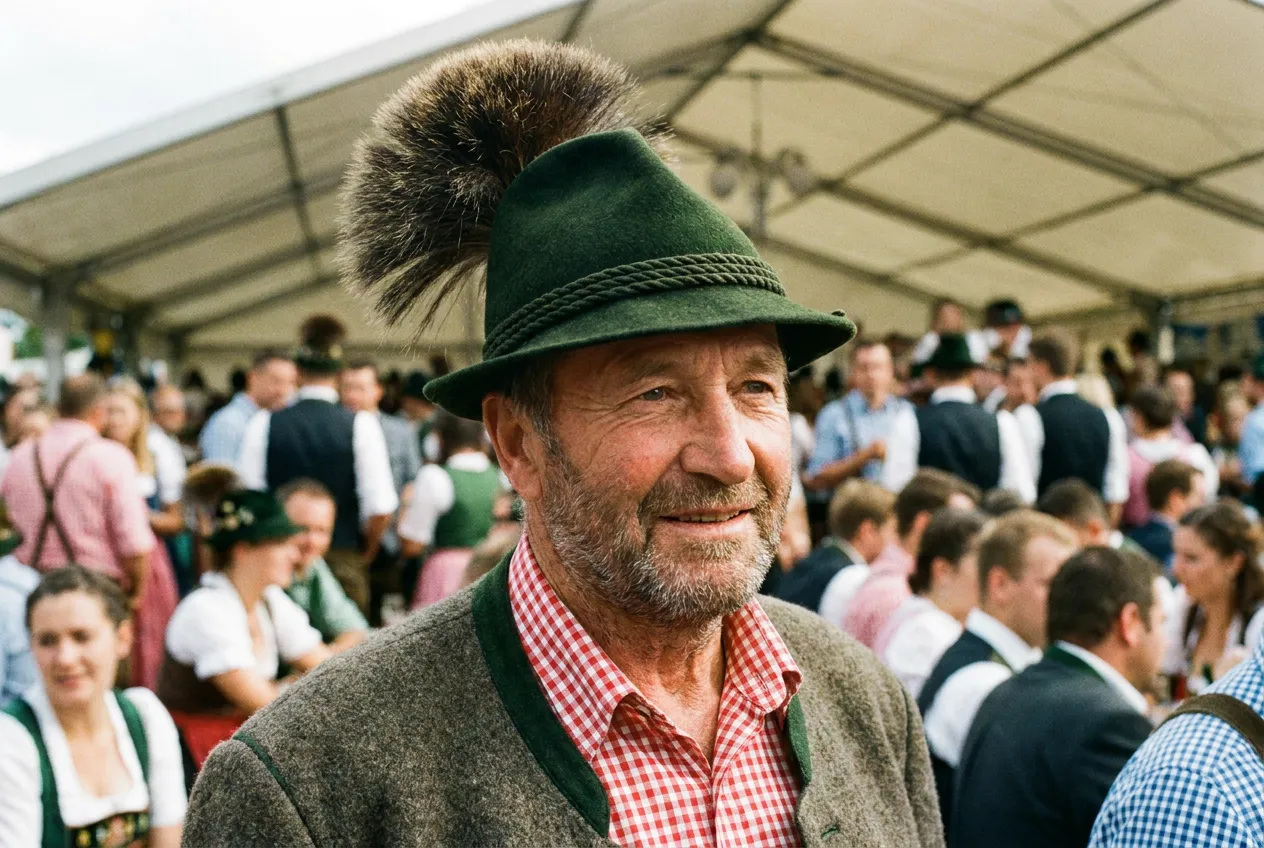
A green or grey felt hat with a cord band and a feather or Gamsbart (chamois-hair tuft) finishes any men’s outfit. It also works as a last-minute option on its own.
6. Haferlschuhe and Loferl
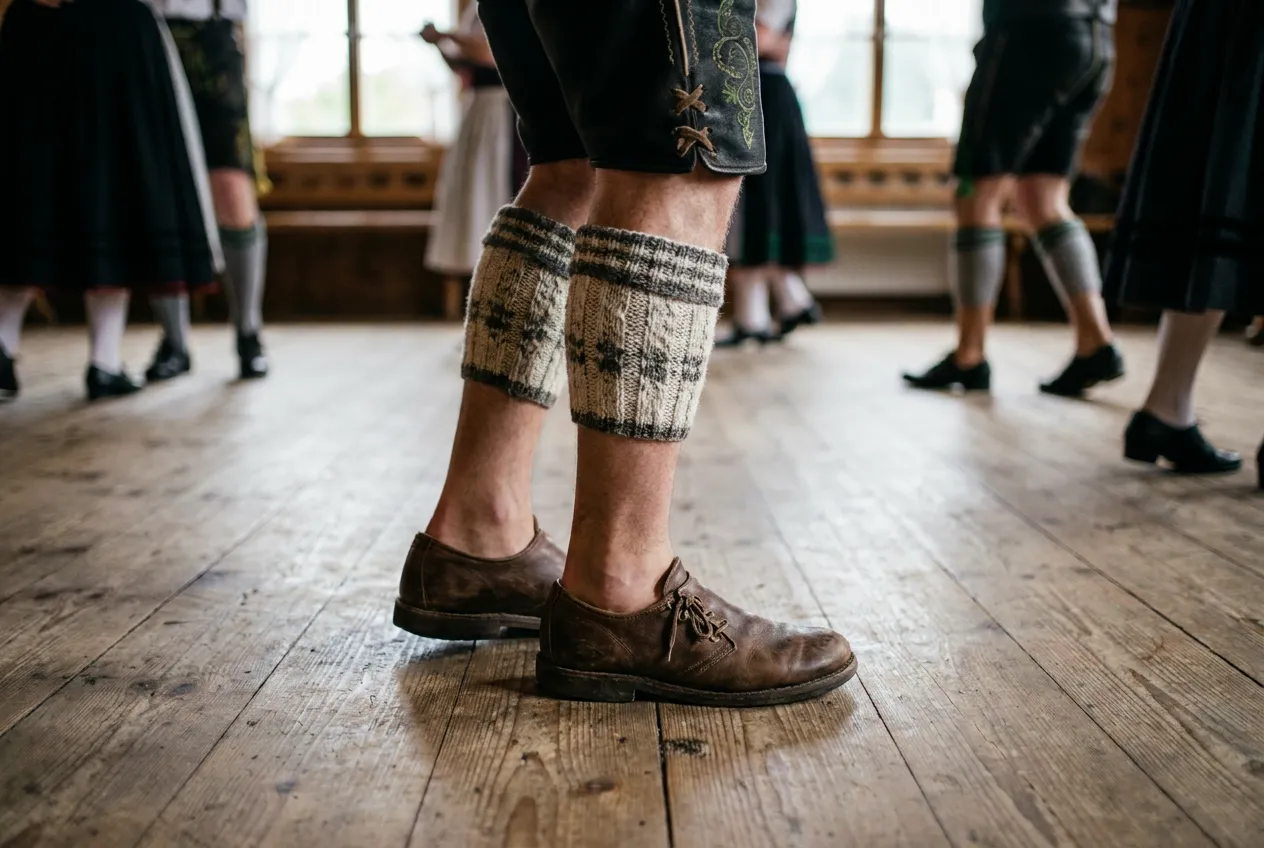
Traditional Haferl shoes are sturdy brown leather shoes laced at the side. Pair them with Loferl, the two-piece calf warmers worn with bare ankles, or with simple wool knee socks. Plain brown boots are a fine budget substitute.
Oktoberfest outfits for women
7. Classic midi dirndl
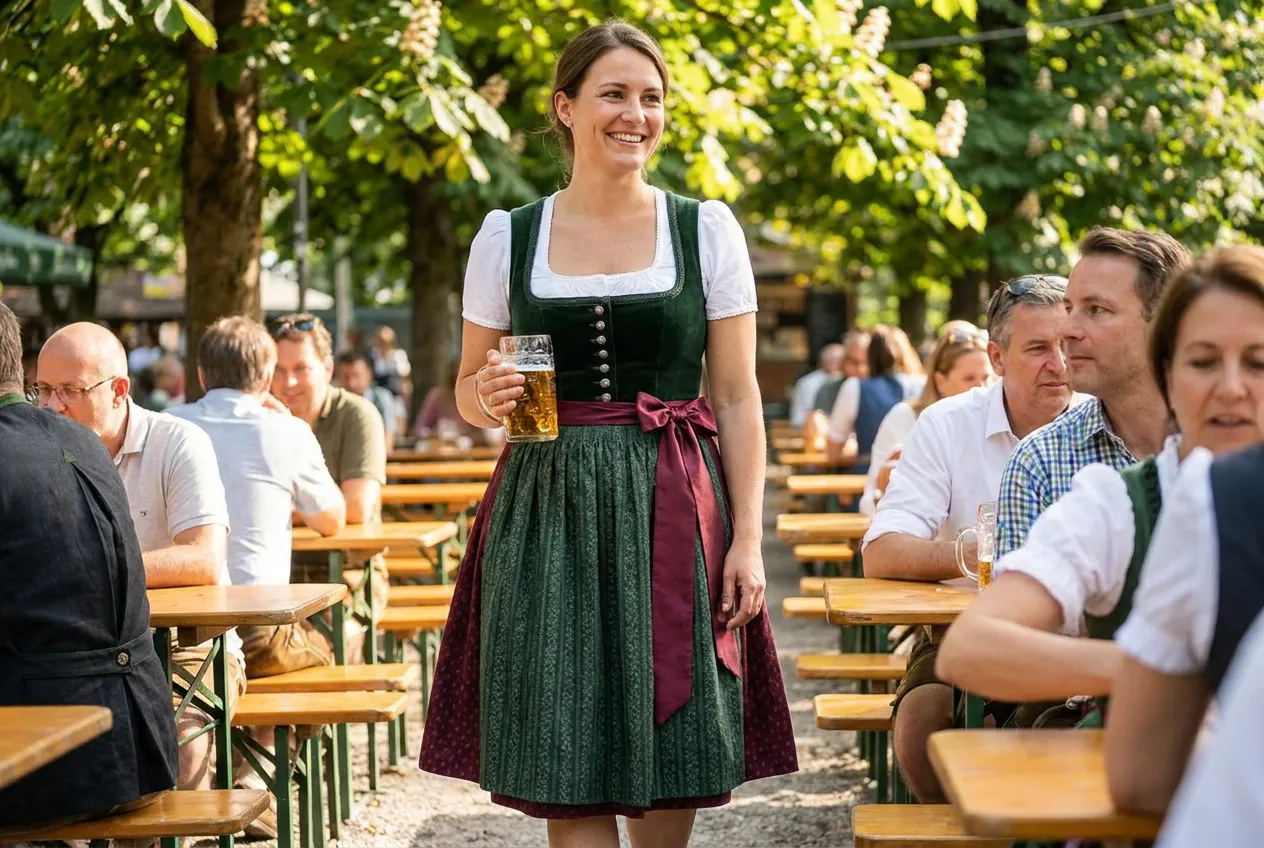
The traditional dirndl has four parts: a fitted bodice, a full skirt, a short white blouse underneath and an apron. The midi length, around 70 cm, falls below the knee and is the most popular cut in Munich today. Authentic dirndls in Australia usually cost $150 to $400 or more. Costume versions cost $30 to $70.
8. Mini dirndl
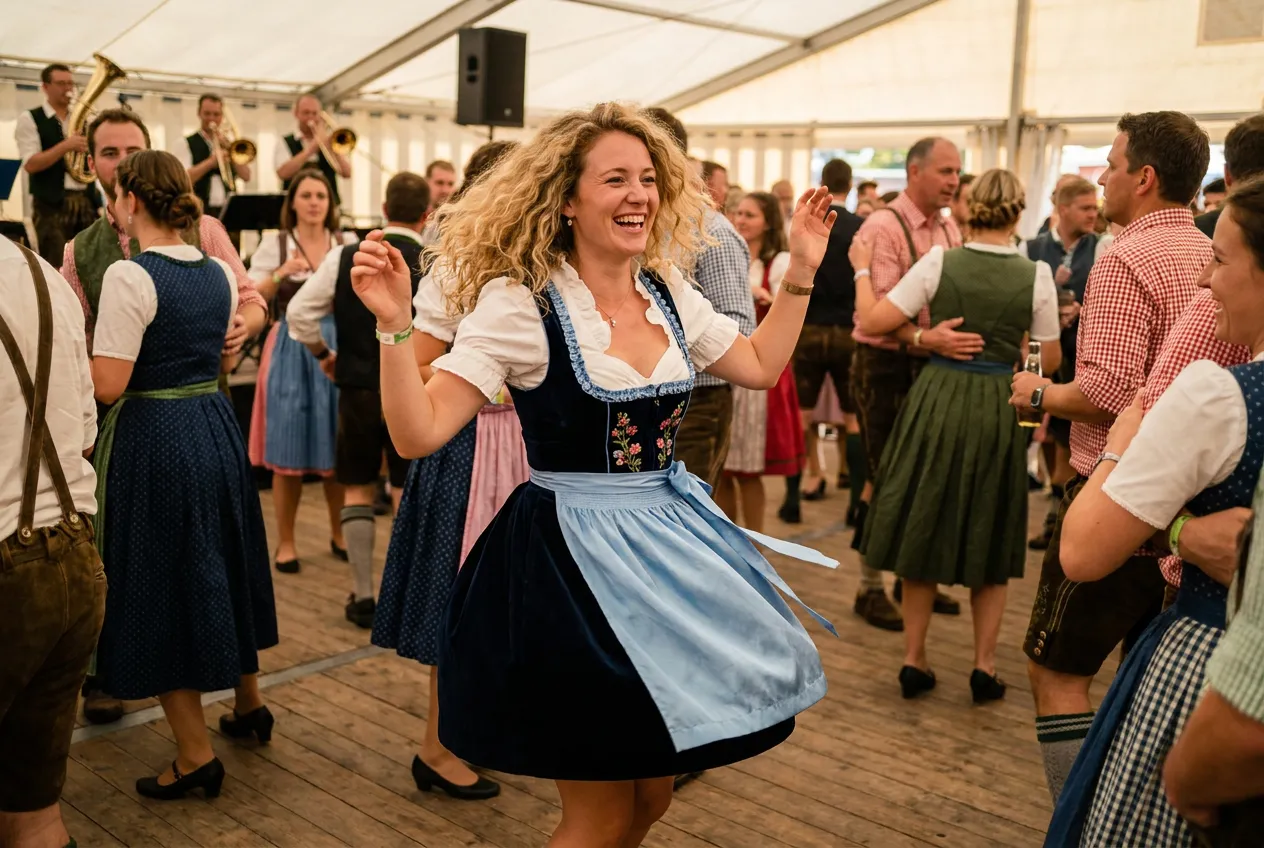
A shorter skirt, around 50 to 60 cm, suits a warm Australian spring day and is easier to move in on a crowded dance floor. Pick one with a proper blouse and apron so it still reads as a dirndl rather than a costume.
9. Long, traditional dirndl
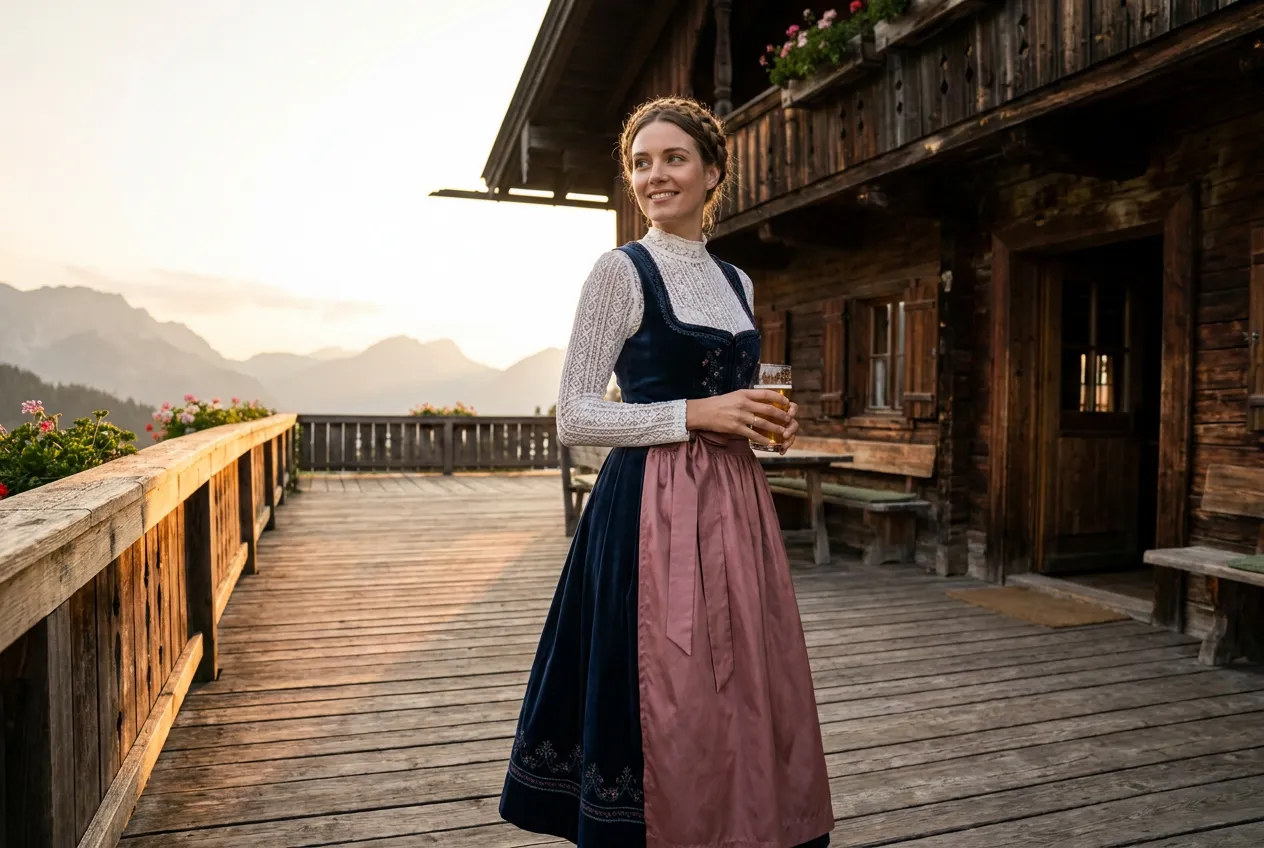
Floor-length or ankle-length dirndls in heavier fabric are the most formal option. They’re a great choice for an evening event, especially if you’d like something you can wear to a German wedding too.
10. Modern and coloured dirndls
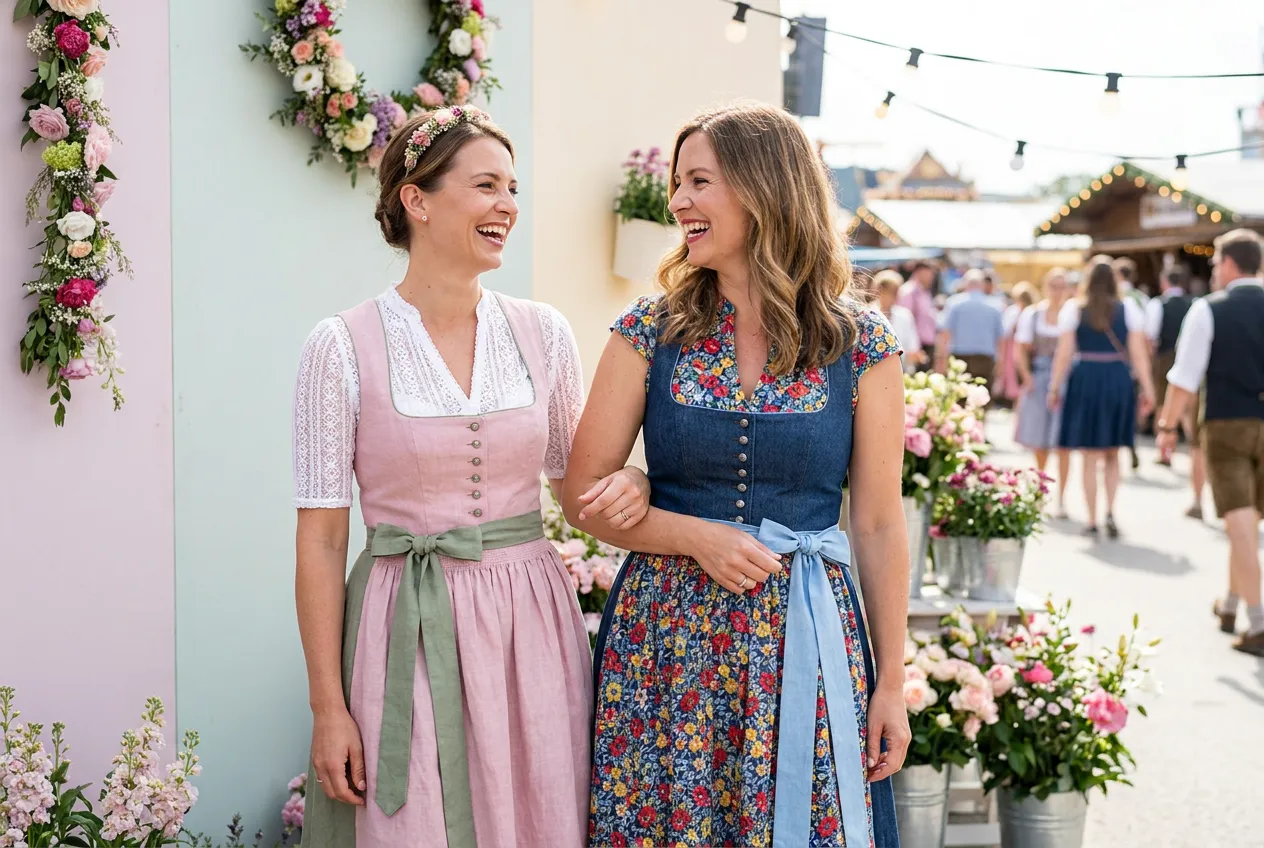
Today’s dirndls come in pastel pink, navy, sage green and bold prints, sometimes with lace blouses or denim bodices. Choose a colour that suits you. Just pick the apron colour to complement the dress rather than match it exactly.
11. Ladies’ lederhosen
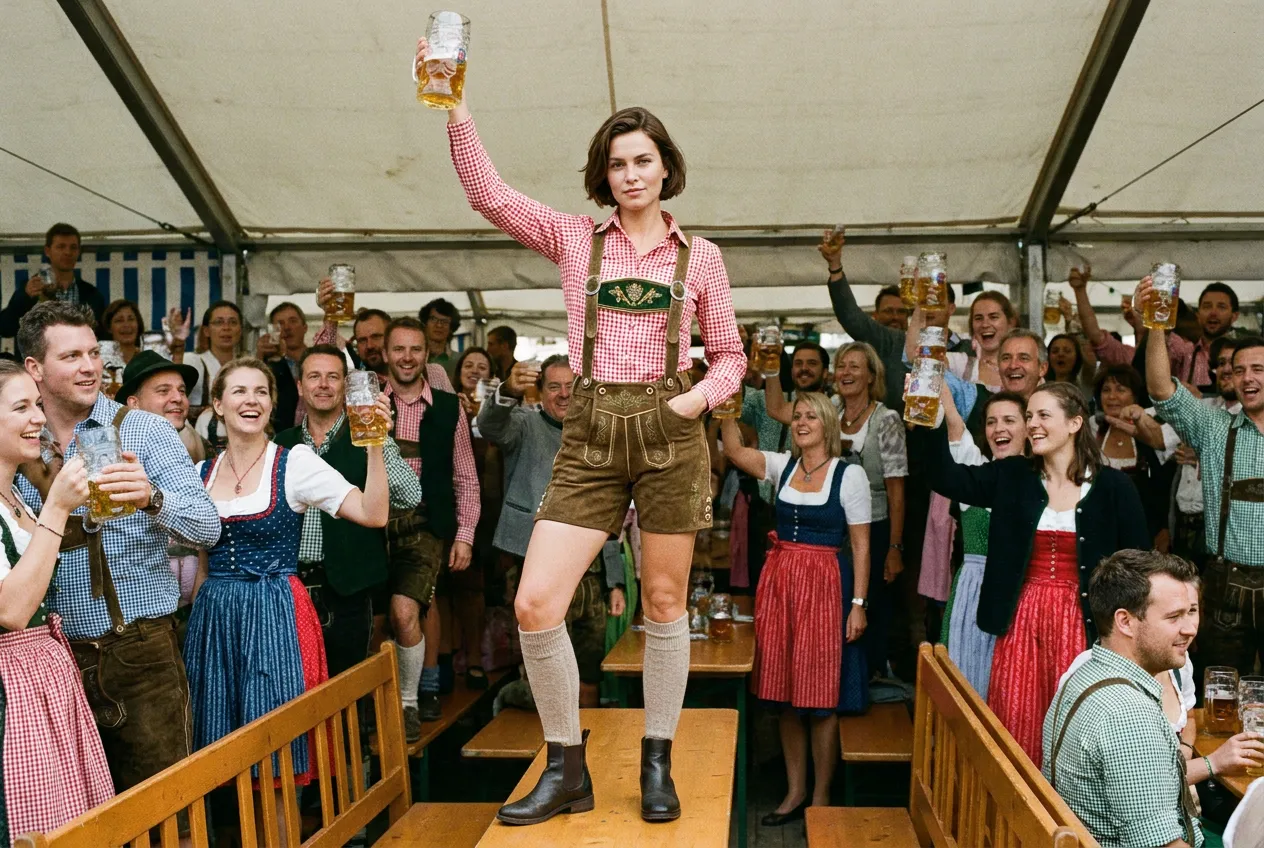
Women wear lederhosen in Bavaria too, usually as shorts with a checked blouse or a fitted top. It’s a practical choice if you’ll be standing on benches or don’t like dresses.
Group, last-minute and fun ideas
12. The beer maid costume
The German beer maid, with a laced bodice, puffed sleeves and apron, is the most popular women’s Oktoberfest costume at fancy-dress stores. For the story behind it, read our article on the German beer maid.
13. Matching couple or group outfits
Book a table for eight and dress everyone in the same colour scheme: all-blue checked shirts and matching dirndl aprons, for example. It makes great photos, and friends are easy to spot in a crowded beer tent.
14. The five-minute Oktoberfest outfit
No time? Take a checked shirt from your wardrobe, add braces, and buy an Alpine hat or a gingerbread heart necklace on the day. Most festivals sell hats and accessories at the gate.
15. Accessories that finish any outfit
- Lebkuchenherz: a gingerbread heart on a ribbon, iced with a message
- Braids: a crown braid or two plaits are the classic dirndl hairstyle
- Flower crown or hair clip: an easy upgrade for any dirndl
- Charivari: a traditional silver chain with charms worn on men’s lederhosen
- Stockings and knee socks: white or cream, sold separately at most costume stores
How to wear a dirndl the right way
- Apron bow on the left: single
- Apron bow on the right: married or in a relationship
- Bow at the front centre: traditionally a young girl
- Bow at the back: widowed, or working as a waitress
The blouse should finish just under the bust, and the apron should be the same length as the skirt or slightly shorter. Our German beer girl article has more dirndl facts.
Where to buy Oktoberfest outfits in Australia
Prices are those we found in September 2026 and change often. Check the store before you buy, and order at least a week before your event.
Authentic dirndls and lederhosen
- Schnucki Dirndl & Lederhosen (Brisbane): Australia’s specialist in authentic German Tracht. Pieces are hand-picked in Salzburg and range from about $99 for accessories to more than $400 for a dirndl. The showroom is in East Brisbane (book ahead), and they ship Australia-wide. Look for their pop-up at the Brisbane German Club’s Oktoberfest.
- Gentry Choice (online): genuine suede leather lederhosen and traditional outfits for men and women.
Costumes, delivered fast
- Costumes in Australia (Melbourne): dirndls from about $28 to $48 and lederhosen from about $40 to $53. Same-day dispatch on weekday orders before 2pm, with warehouse pickup in Box Hill South by appointment.
- Blossom Costumes (Melbourne): Oktoberfest costumes from about $40 to $80, same-day dispatch before 1pm AET and free shipping over $150. It’s the official costume partner of Oktoberfest in the Gardens.
- CostumeBox (online): a wide range of lederhosen, dirndls, hats and accessories.
Costume stores you can visit
- The Costume Company (Kedron, Brisbane): in-store since 1981. Most Oktoberfest costumes cost $50 to $80, and leather lederhosen are about $220.
- Cracker Jack Costumes (Brisbane): dirndls, beer maid dresses, hats, stockings and wigs.
- Disguises (Brisbane): lederhosen, with fitting advice in store.
- Costumes To Buy (Wangara, Perth): Oktoberfest costumes from about $45 to $120, in store or online.
In Sydney and Adelaide, the Melbourne-based online stores are the quickest option. Most deliver next day or within a few business days.
Ready to wear it?
Now that you’ve picked your outfit, find somewhere to wear it. Our guide to Oktoberfest 2026 in Australia lists every event in Sydney, Melbourne, Brisbane, Perth and Adelaide. For the history of the look, see our German beer costume page.
Oktoberfest outfit FAQs
What do you wear to Oktoberfest?
Traditionally, men wear lederhosen with a checked shirt, and women wear a dirndl with a blouse and apron. A checked shirt, braces and an Alpine hat also work if you don’t want a full outfit.
How much do lederhosen cost in Australia?
Costume lederhosen cost around $40 to $60. Authentic leather lederhosen start at around $200 and can cost several hundred dollars.
Where can I buy a dirndl in Australia?
For an authentic dirndl, Schnucki in Brisbane is the specialist. For a costume dirndl, online stores such as Costumes in Australia and Blossom Costumes ship from Melbourne, often the same day.
Is it offensive to wear an Oktoberfest costume?
No. Germans generally welcome visitors in dirndls and lederhosen, and it’s part of the fun. Just avoid overly revealing “sexy” costumes if you’ll be at a family-friendly German club event.