Every Australian Oktoberfest, from the German clubs of Sydney to the big weekend in Brisbane, is modelled on one festival: the Oktoberfest in Munich. Locals call it the Wiesn, after the Theresienwiese meadow where it’s held. It draws more than six million visitors in just over two weeks, and a good number of them have flown 16,000 km from Australia to be there.
If you’re thinking of making the trip, here’s what you need to know, written for Australians, with prices in Aussie dollars.
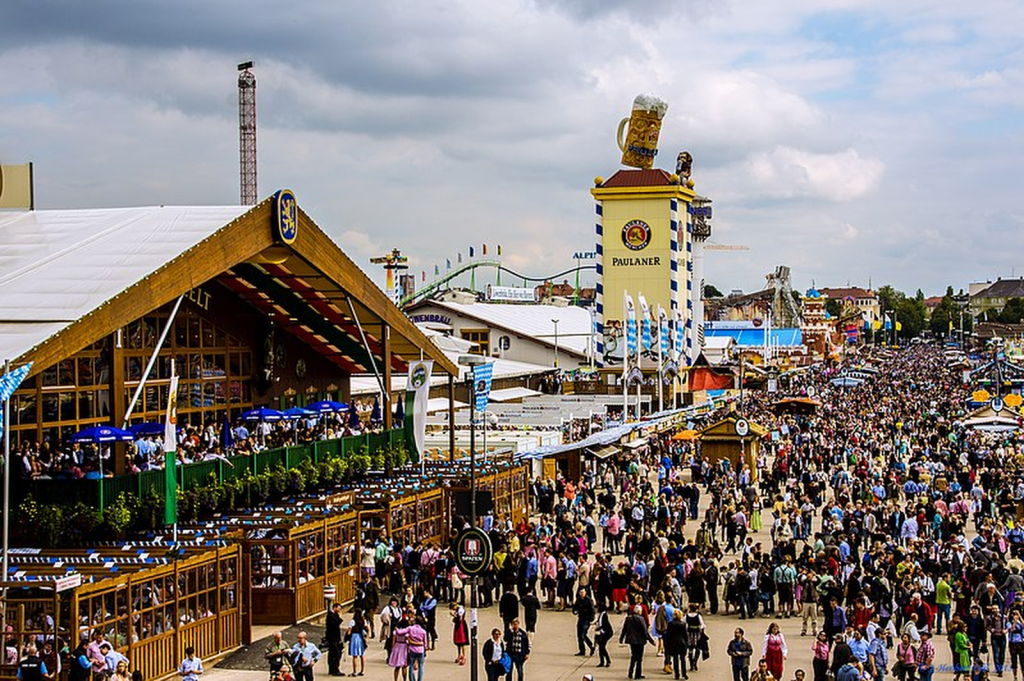
When is Oktoberfest 2027?
Oktoberfest 2027 is expected to run from Saturday 18 September to Sunday 3 October 2027. Despite the name, most of the festival happens in September. It always ends on the first Sunday of October, or on German Unity Day (3 October) if that falls later.
The 2026 festival ran from 19 September to 4 October. Check the official dates at oktoberfest.de before you book flights.
Getting there from Australia
There are no direct flights from Australia to Munich. Most Australians fly with one stop, usually through Singapore, Dubai, Doha, Abu Dhabi or Bangkok, and the trip takes 22 to 26 hours door to door. Flying into Frankfurt and taking the ICE train to Munich (about 3 hours 15 minutes) is another option when fares into Munich are high.
Late September is the shoulder season in Europe, but flights into Munich still fill up. Book four to six months ahead for the best fares, and aim to arrive a day before you plan to hit the tents. Munich is 8 hours behind Sydney and Melbourne in late September, and jet lag and litre steins don’t mix.
Passports and entry
Australians can visit Germany and the rest of the Schengen area without a visa for up to 90 days in any 180-day period. Your passport should be valid for at least three months after you leave Europe.
The EU’s new entry and exit system now registers your fingerprints and photo the first time you cross a Schengen border, so allow extra time at passport control. The EU also plans to introduce ETIAS, an online travel authorisation costing €20 that Australians will need before they travel. It hadn’t started in October 2026. Check Smartraveller before you go, and only ever apply through the official EU website.
Where to stay
Munich’s hotels raise their prices sharply during Oktoberfest, and the best-located rooms are often booked out a year ahead. Book as early as you can, ideally with free cancellation.
- Ludwigsvorstadt and the Hauptbahnhof area: walking distance to the Theresienwiese and close to the airport train. Convenient but noisy.
- Schwanthalerhöhe (Westend): a quieter residential area right next to the festival grounds.
- Altstadt (old town): central and atmospheric, about 20 minutes’ walk from the Wiesn.
- Further out on the U-Bahn or S-Bahn: much cheaper, and Munich’s public transport runs late during the festival.
Organised tour packages with campsites or hotels and guaranteed tent reservations are popular with Australians in their twenties and thirties. They cost more, but take the stress out of getting a seat.
How to get into a beer tent
Entry to the Oktoberfest grounds and the beer tents is free. The challenge is getting a seat, because you can only be served beer if you’re sitting at a table.
- Reservations are made directly with each tent, usually opening in the winter or early spring. Most are for groups of eight or ten and come with a minimum spend on food and drink vouchers. Weekend evenings sell out first.
- No reservation? Part of every tent is kept free for walk-ins. Arrive before 11am on a weekday and you’ll usually find a seat, especially early in the festival.
- Weekends are a different story. On Saturdays and Sundays the big tents are often full by late morning, and security closes the doors when they’re at capacity.
- Beer gardens outside each tent also serve full litres, and on a warm day they’re the best seats at the festival.
The tents and the beer
Only six breweries are allowed to serve beer at the Munich Oktoberfest, all from inside the city: Augustiner, Hacker-Pschorr, Hofbräu, Löwenbräu, Paulaner and Spaten. Each brews a special Oktoberfestbier, a strong golden lager of around 6% ABV that is closely related to Märzen. It’s served by the litre in a glass Mass.
A few tents first-timers love:
- Hofbräu-Festzelt: the most international tent, and the one where you’re most likely to hear an Australian accent.
- Augustiner-Festhalle: a favourite of locals, with beer still served from wooden barrels.
- Schottenhamel: where the mayor taps the first keg at noon on opening day, shouting “O’zapft is!” (“It’s tapped!”).
- Käfer Wiesn-Schänke and Weinzelt: smaller and smarter, and open later than the big tents.
What does it cost?
In 2026, a litre of beer cost between €14.80 and €15.90, around AU$26 to AU$28. Most people round up to the next euro or two as a tip. Half a roast chicken costs about the same as a beer, and a pretzel or a plate of sausages a little less.
A rough daily budget for a big day in the tents, not counting accommodation, is €80 to €120 (AU$140 to AU$210). Bring cash: card payment is spreading, but not every waitress and stall takes it, and the ATMs on the grounds have long queues.
What to wear
Most visitors, locals and tourists alike, wear Tracht: lederhosen for men and dirndls for women. It’s completely acceptable for Australians to dress up, and you’ll stand out more if you don’t. Buying in Munich is easy, but cheaper outfits sell out during the festival, so many Australians bring one from home. See our 15 Oktoberfest outfit ideas for Australian stores, and learn the dirndl bow meaning before you tie yours.
Munich in late September averages around 8°C in the morning and 18°C in the afternoon, and it often rains. Pack a warm layer for the evenings; it’s cooler than an Australian spring.
Tips Aussies learn the hard way
- It’s not a schooner. A Mass is a full litre, about 3.5 schooners, at 6% or more. Pace yourself and eat.
- Benches yes, tables no. Standing on the benches to sing along with the band is part of the fun. Standing on the tables is not, and it will get you thrown out.
- Don’t take the glass. Stealing a Mass is treated as theft, and security checks bags at the exits.
- Small bags only. Bags bigger than about 3 litres aren’t allowed on the grounds. There’s a bag drop at the entrances, but the queue is long.
- Toast properly. Look each person in the eye and say “Prost!” when you clink glasses.
- Watch the middle weekend. The second weekend is the busiest of the festival. If you only have a few days, go early in the festival and on weekdays.
- Take the U-Bahn. The Theresienwiese and Goetheplatz stations are right by the grounds. Don’t even think about driving.
Make a trip of it
Most Australians who fly to Munich for Oktoberfest spend at least three weeks in Europe. Popular add-ons include the Bavarian Alps and Neuschwanstein Castle, Salzburg (under 2 hours by train), and a beer pilgrimage to Bamberg or the monastery breweries of Upper Bavaria. Outside festival time, Munich’s year-round beer halls and beer gardens keep the atmosphere going. Our page on German beer halls has more on the tradition.
Can’t make it to Munich this year?
You don’t have to fly halfway around the world. Our guide to Oktoberfest 2026 in Australia lists every event in Sydney, Melbourne, Brisbane, Perth and Adelaide, many pouring the same Munich beers.
Oktoberfest Munich FAQs
When is Oktoberfest in Munich in 2027?
It is expected to run from Saturday 18 September to Sunday 3 October 2027.
Do Australians need a visa for Oktoberfest?
No. Australians can stay in Germany and the Schengen area without a visa for up to 90 days. Once ETIAS starts, you’ll need to apply online for a travel authorisation before you fly.
How much is a beer at Oktoberfest in Australian dollars?
In 2026 a litre cost €14.80 to €15.90, around AU$26 to AU$28.
Do you need a ticket for Oktoberfest in Munich?
No. Entry to the festival and the tents is free. A table reservation guarantees a seat, but walk-ins can usually find one on weekday mornings.
How do you get from Australia to Munich?
With one stop, usually in Singapore, Dubai, Doha, Abu Dhabi or Bangkok. The journey takes about 22 to 26 hours.
What is the best time to go to Oktoberfest?
Weekdays early in the festival are the least crowded. Opening day and the middle weekend are the busiest.