- Founded
- 1634
- Brewed in
- Munich, Bavaria, Germany
- Owner
- Paulaner Brauerei Gruppe
- Known for
- Helles, Hefeweizen, Doppelbock, Oktoberfest beer
- Try first
- Paulaner Hefe-Weissbier Naturtrüb
- In Australia
- Stocked by most big Australian bottle shop chains, such as Dan Murphy’s, BWS and Liquorland.
- Beer types
- Helles, Märzen, Wheat Beer, Bock Beer
- Official site
- paulaner.com
Paulaner is the German beer most Australians have tried, even if they don’t know it. Its blue-and-white label is a fixture in Dan Murphy’s, BWS and Liquorland fridges, and its Hefe-Weissbier is a go-to for anyone who has ever ordered “a German wheat beer” at a bar.
The story of Paulaner
Paulaner takes its name from the Minim friars of St Francis of Paola, who arrived in Munich in the 17th century and brewed beer at their Neudeck ob der Au monastery. Records from 1634, when Munich’s civilian brewers complained about the monks selling their beer, are where the brewery dates its founding.
To get through Lent, the friars brewed a strong, malty beer they called “liquid bread”. That beer became Salvator, the first Munich doppelbock, and every other doppelbock that ends in “-ator” is a nod to it. Paulaner still taps the first Salvator keg each spring at the Starkbierfest on Munich’s Nockherberg.
Today Paulaner is part of the Paulaner Brauerei Gruppe, which also owns Hacker-Pschorr. It is one of only six breweries allowed to serve beer at the Munich Oktoberfest.
Paulaner beers to try
- Hefe-Weissbier Naturtrüb (5.5%): The flagship. Cloudy, golden and soft, with banana and clove notes and a creamy head.
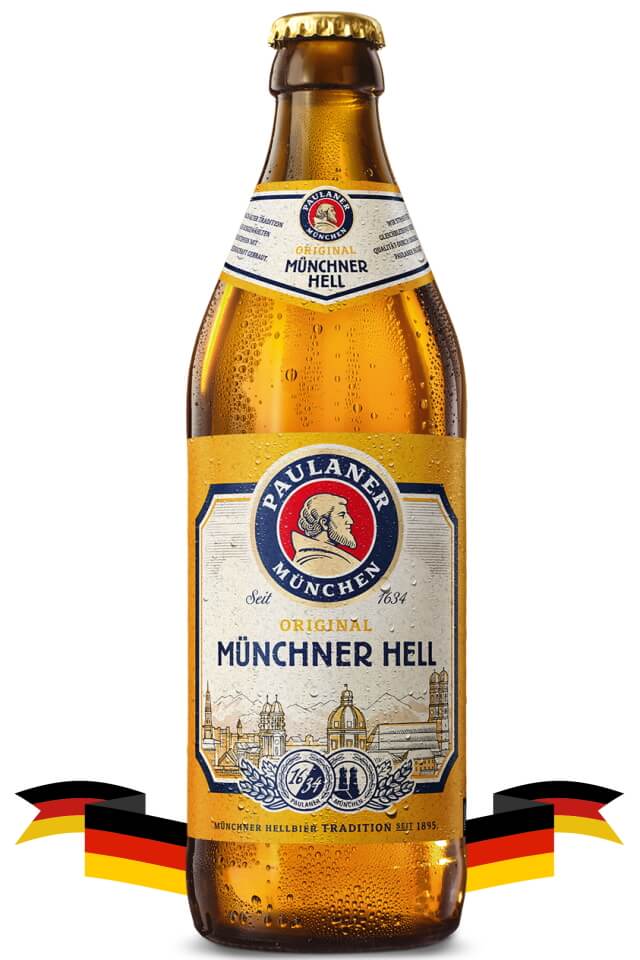
- Münchner Hell (4.9%): A pale, gently malty Munich lager. Crisp, easy-drinking and ideal for an Australian summer.
- Salvator Doppelbock (7.9%): Dark amber, rich and bready with caramel sweetness. A winter beer.
- Oktoberfest Bier (about 6%): The golden festival beer poured in the Paulaner tent, released in Australia around September.
- Hefe-Weissbier Alkoholfrei: An alcohol-free wheat beer that keeps most of the original’s flavour. See our alcohol-free German beers.
What does Paulaner taste like?
The wheat beer is full and fruity rather than bitter, so it suits drinkers who find hoppy pale ales too sharp. Pour it into a tall wheat beer glass, leaving the last bit in the bottle to swirl up the yeast before topping up. The Münchner Hell is drier, with bready malt and a light floral hop finish.
Food pairing: Weissbier with grilled prawns, a Sunday barbecue or a classic Weisswurst breakfast. The Hell goes with schnitzel, pork knuckle and almost anything off the grill. Salvator stands up to roast pork, blue cheese and sticky desserts.
Where to buy Paulaner in Australia
Paulaner is widely stocked. You’ll usually find the Hefe-Weissbier and Münchner Hell in bottles, cans and multipacks at:
- Dan Murphy’s, BWS, Liquorland and First Choice Liquor, in store and online
- Independent bottle shops with an imported range, which are more likely to carry Salvator and the seasonal Oktoberfest Bier
Expect to pay a premium over local beer. Our German beer prices guide explains why. To drink it on tap, try the German restaurants and beer halls on our Sydney, Melbourne, Brisbane, Perth and Adelaide pages, or catch it at an Oktoberfest in Australia.
Paulaner FAQs
Is Paulaner available in Australia?
Yes. Paulaner is one of the easiest German beers to find in Australia. The Hefe-Weissbier and Münchner Hell are stocked by most big bottle shop chains, such as Dan Murphy’s, BWS and Liquorland, and specialist bottle shops often carry the Salvator Doppelbock and the seasonal Oktoberfest Bier too.
Is Paulaner brewed in Germany?
Paulaner is brewed in Munich, at the brewery in the Langwied district that replaced the old Nockherberg site in 2016. Only beer brewed within Munich’s city limits may be called a Munich beer, which is why Paulaner is one of the six breweries allowed to serve at the Munich Oktoberfest.
What is the best Paulaner beer?
The Hefe-Weissbier Naturtrüb is Paulaner’s best-known beer and the one to start with. If you prefer a clear, crisp lager, try the Münchner Hell. For something richer, the Salvator Doppelbock is the original Munich doppelbock.
How strong is Paulaner beer?
The Münchner Hell is 4.9% ABV and the Hefe-Weissbier is 5.5%. The Oktoberfest Bier is about 6% and the Salvator Doppelbock 7.9%. There is also an alcohol-free Weissbier.
← Back to all German beer brands · Ranked #1 in our list. Last updated 2 October 2026.